

This Monday Night Football analysis focuses on how the 49ers managed a turbulent win rather than simply what happened on the scoreboard. Entering the night, the 49ers (7–4) were searching for consistency, while the Panthers (6–5) arrived with momentum after three straight road victories.
The added backdrop of Christian McCaffrey facing his former team turned this into a compelling tactical case study. Instead of an explosive primetime show, the game unfolded as a detailed look at decision-making, defensive structure, and the mechanics behind drive-by-drive momentum shifts.
How Purdy’s Early Interceptions Reshaped the Opening Structure
Brock Purdy’s first-half performance altered the entire sequencing of San Francisco’s offense. His opening throw — intercepted by Jaycee Horn — forced the 49ers into reactive mode far earlier than expected. A deep-ball turnover to Mike Jackson and a third mistake, again claimed by Horn, put the Panthers in premium field position repeatedly.
How Each Turnover Changed Carolina’s Offensive Setup
| Sequence | Event | Resulting Panthers Drive | Outcome |
|---|---|---|---|
| INT #1 | Jaycee Horn jumps first play | Starts at midfield | Field goal only |
| INT #2 | Deep shot picked by Mike Jackson | Enters red zone | Drive stalls at SF 4 |
| INT #3 | Horn’s second takeaway | Prime scoring chance | Young INT to Ji’Ayir Brown |
These moments created structural openings that Carolina couldn’t convert. Examples included:
- A third-down drop by Tetairoa McMillan, breaking the rhythm of a red-zone sequence
- A red-zone intentional grounding that eliminated a scoring setup
- Bryce Young floating a fade instead of placing it early, allowing Ji’Ayir Brown to read it cleanly
The core format takeaway: Purdy provided Carolina with chances, but the Panthers didn’t follow through with red-zone execution.
How McCaffrey Became the Adjustment Mechanism for San Francisco – Monday Night Football analysis
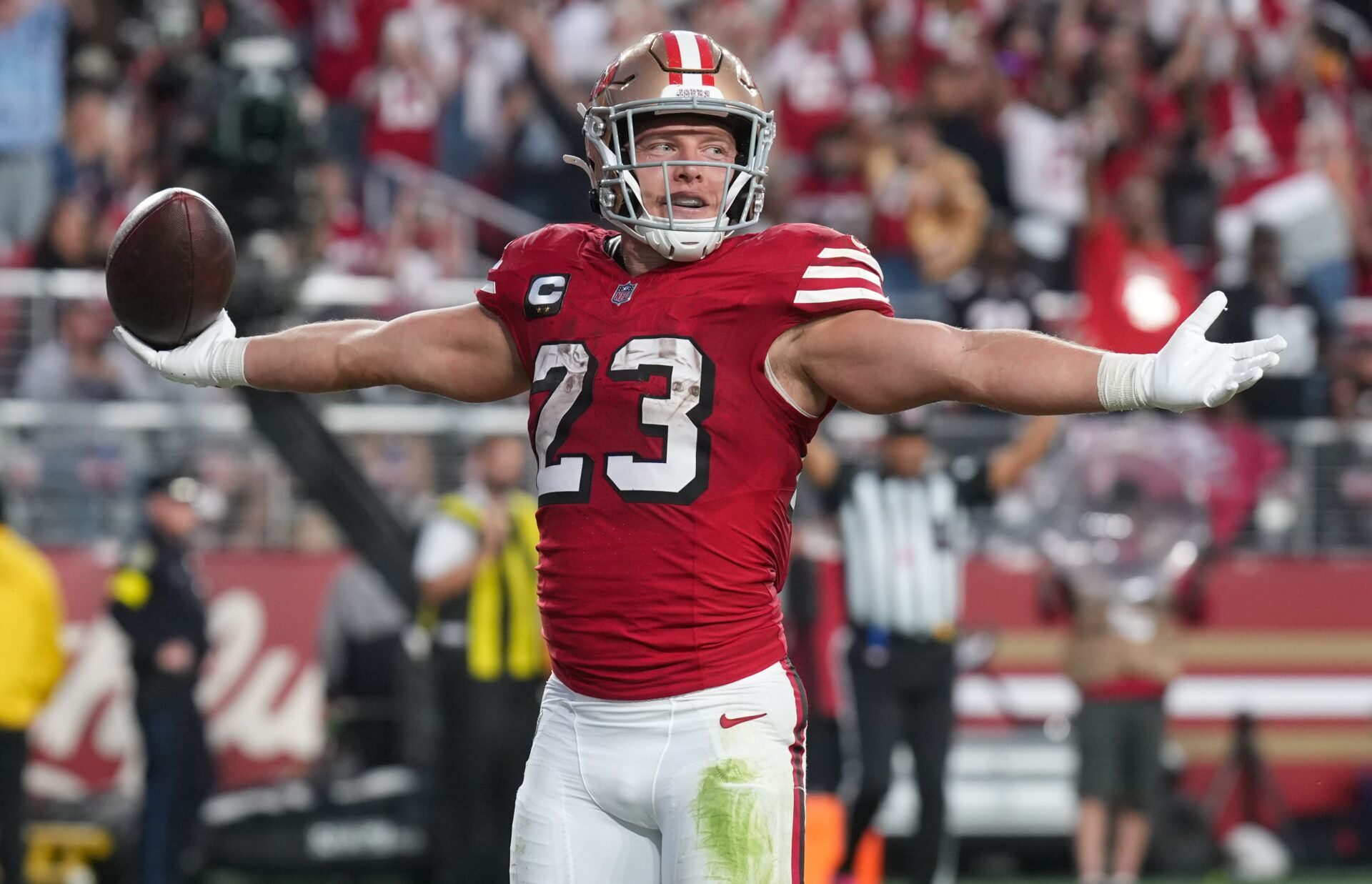
Christian McCaffrey served as the 49ers’ internal reset button. His 31 touches for 142 yards were less about volume and more about recalibrating the offensive structure once the passing game destabilized.
The most important sequence — a 13-play, 80-yard touchdown drive — showcased the operational template the 49ers relied on:
- Early down runs to prevent long-yardage scenarios
- Horizontal motion to freeze Carolina’s linebackers
- Pull-block designs to open interior lanes for McCaffrey
His 12-yard touchdown run was the payoff for that formula, shifting the game from unstable to controlled. Once that drive landed, the 49ers leaned into possession tactics, minimizing Purdy’s high-risk reads and stabilizing their pace.
How the 49ers’ Defensive Structure Held Firm While Carolina’s Talent Surfaced – Monday Night Football analysis
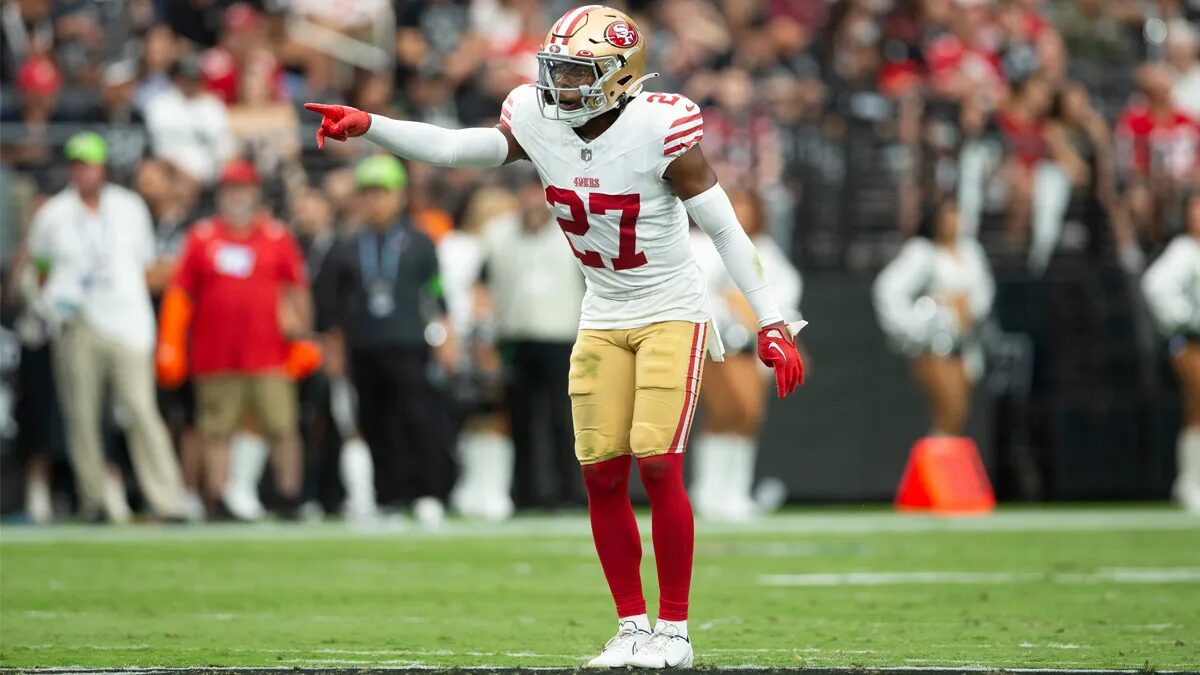
San Francisco’s defensive success came from a clean structural approach rather than overwhelming pressure. Ji’Ayir Brown produced two interceptions by reading route development early and tightening space before the break point. Luke Farrell’s timely sack was another example of the defense responding in structured moments rather than chaotic ones.
Even without Fred Warner, the 49ers allowed Carolina to move the ball but repeatedly shut the door inside the 25-yard line. The Panthers’ nine points — all generated from Purdy turnovers — reflected a defense prioritizing containment and late-down discipline.
Carolina’s rookies offered strong examples of emerging structure:
- Tetairoa McMillan’s 29-yard touchdown, built on disciplined stem work after earlier drops
- Rico Dowdle’s outside-zone bursts, giving Young early answers under pressure
- Bryce Young’s 18/29, 169 yards, illustrating improved pacing but costly late reads
This blend showed a young offense capable of rhythm but still prone to breakdowns in crucial moments.
How Injuries, Situational Decisions, and Late Momentum Factored Into the Result – Monday Night Football analysis
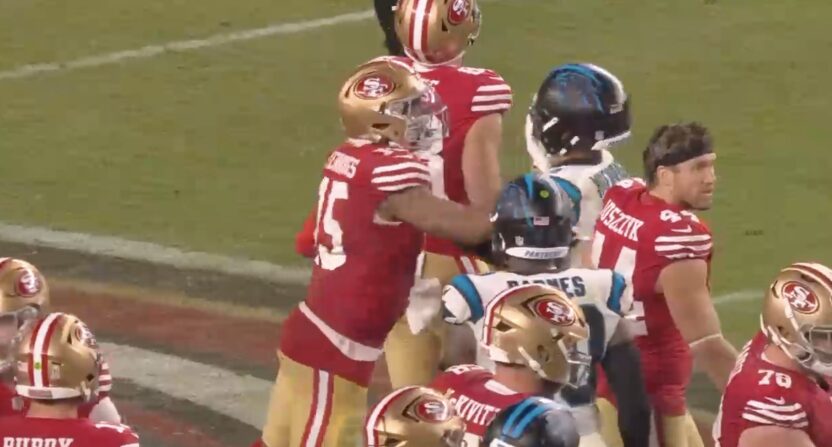
Situational football determined the closing arc of the night. Jaycee Horn, who had delivered two early interceptions, left with a concussion, forcing Carolina into more conservative coverage structures. A brief postgame shove involving Jauan Jennings and Moehrig added emotional context but didn’t change the outcome.
San Francisco continued without Brandon Aiyuk, limiting spacing options, while emergency kicker Matt Gay handled responsibilities smoothly. For Carolina, Robinson’s first NFL start brought a developmental storyline into a tight game.
From a standings perspective:
- The 49ers climbed to 8–4, strengthening conference tiebreak scenarios
- The Panthers dropped to 6–6, missing the structural payoff that early turnovers should have produced
Explainer takeaway: the late-game story wasn’t about talent gaps — it was about situational execution.
Conclusion — What This MNF Game Reveals About Both Teams’ Foundations
This Monday Night Football analysis ends with a clear conclusion: the 49ers survived because their foundational structure held, not because the offense played a complete game. McCaffrey stabilized their rhythm, and the defense repeatedly absorbed pressure without breaking.
Carolina showed enough flashes to stay competitive, but their inability to finish drives — especially after turnovers — pointed to gaps in red-zone consistency and timing. Both teams remain in the playoff mix, but both leave the field aware that their December progression will depend on cleaner, more connected execution.


