The structure of the CSGO Major 2025 Qualifiers represents a significant evolution in the landscape of competitive esports. It characterized by nuanced adaptation to regional diversity and competitive integrity. Valve’s decision to abandon a homogenous, universal model in favor of tailored regional qualification frameworks marks a pragmatic acknowledgment of the disparate competitive realities worldwide. In turn, both established organizations and emerging contenders now engage under systems designed. It is to rigorously assess their abilities on a more level and inclusive playing field.
Summary
CSGO Major 2025 Qualifiers – Direct Qualifiers

Valve’s Regional Standings system prioritizes sustained excellence over isolated high points. It rewarding organizations that demonstrate consistently superior performance across multiple events. This approach acts as a safeguard against volatility, ensuring that qualification is conferred upon teams such as NAVI, Spirit, Vitality, and G2 based on demonstrable and repeatable success. Longevity and reliability, rather than transitory peak performance, are foregrounded as the most valued attributes for direct qualification.
CSGO Major 2025 Qualifiers – European MRQ

Europe’s Major Regional Qualifier employs the Swiss-system format, a structure that permits iterative adjustment by pairing teams in real-time according to performance in preceding rounds. This methodology introduces a dynamic blend of unpredictability and fairness, enabling teams with brief setbacks to recalibrate and recover, as evidenced by the successful runs of B8 and Nemiga. By facilitating resilience and adaptability under fluctuating pressure, the Swiss system establishes a rigorous competitive environment that mirrors the complexity of contemporary tournament play.
Americas MRQ: Redemption Encapsulated in Double-Elimination


Within the Americas, the Double-Elimination format further intensifies the competitive demands placed upon participants. Here, early setbacks do not immediately preclude further contention, but instead require teams to demonstrate mental fortitude and tactical refinement in the lower bracket. Success stories such as NRG and BESTIA are illustrative of the grit required to navigate this pathway, marking the double-elimination model as a test of both endurance and ingenuity.
Asia-Pacific MRQ: Growth and Regional Diversity
—Picture source from internet—
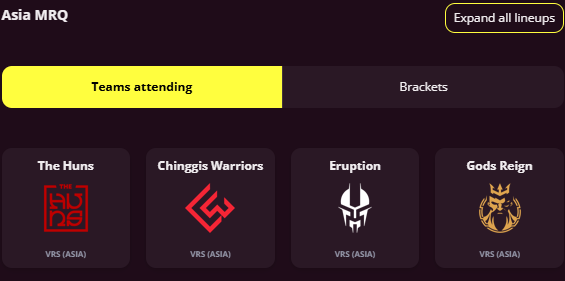
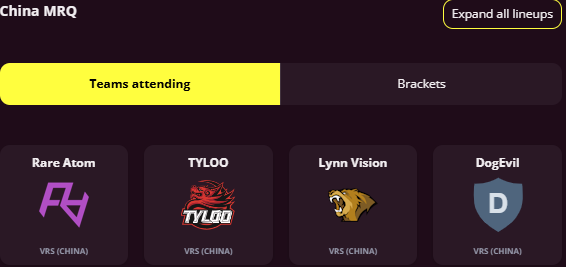
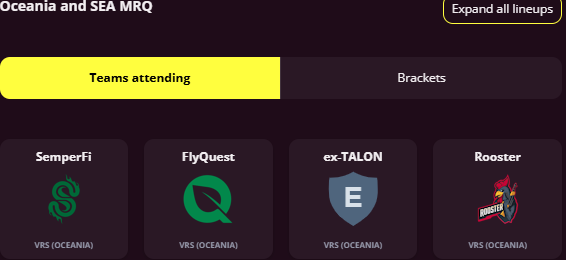
The Asia-Pacific qualifying system is shaped by a commitment to inclusivity, dividing opportunities across China, Mongolia & West Asia, and Oceania & Southeast Asia. This segmentation mitigates historical imbalances and enables teams from emergent esports markets to showcase their potential. Teams such as TYLOO, LVG, FlyQuest, and Chinggis Warriors exemplify the diversity and vitality fostered by this approach, signalling the rapid expansion of Counter-Strike engagement in these regions.
Conclusion
Collectively, the revised structure of the CSGO Major 2025 Qualifiers embodies a sophisticated equilibrium between consistency, adaptability, and equitable representation. By employing methodologies such as the Valve Regional Standings, the Swiss-system, and double-elimination—augmented by conscious regional segmentation—Valve has ensured that the qualification process not only elevates the world’s highest-performing teams, but also promotes broader global inclusivity. As such, the 2025 qualifiers appropriately reflect the evolving demands and aspirations of the international esports community.